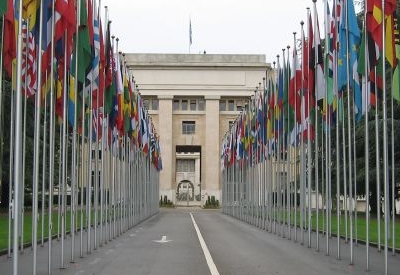
John Rawls: The Law of Peoples 2009 with new Trump 2.0 analysis August 12 2026
Since 2009, the international community has faced the aftermath of 911 and Al - Qaeda fugitives, the 2008 financial crisis, COVID, a belligerent Russia, and an American President with little regard for the rules based international order in Donald Trump. The good news is that Al Qaeda has been muted, though, other islamic fundamentalist groups are vying for influence in middle eastern and African(Libya) politics. The US remains the de facto military and economic power, though, it is losing its grip to China, and Allies who Mr Trump is spurning for economic gain through tariffs, ambivalence through inaction in the Russia- Ukraine conflict, and Trump's made in America internal dissent with immigration through ICE (Immigration and Customs Enforcement) in coordination with the Dept. of Homeland Security resulting in chaotic police presences in Minnesota, Chicago, Utah and other states.
When a far left President in Barrack Obama "befriends" a former Republican President in George W Bush who sued for public office in 2000 and is seen as a vice of reason, the global state of affairs is under serious strain. And let's not forget that George W Bush is guilty of war crimes for the war in Iraq. Now, Donald Trump and Israeli Prime Minister Benjamin Netanyahu are both guilty of war crimes in Iran in 2026. The American missile that killed 166 Iranian schoolgirls validates Donald Trump' s culpability as a war criminal; it is his war. Defense Secretary Pete Hegseth should face the ICC (International Criminal Court) at The Hague for war crimes, 7144 - 9678 killed with 46,95 injured according to Iran War Live https://iranwarlive.com/casualties . The USA is not a signatory to the ICC, thus, giving them maximin room to manoeuvre along foreign policy lines without legal recourse.
So, as Islam reformulates its response to American belligerence and hegemony, is Mojtaba Khamenei the new sharia in town that counters this American President? As Trump has lost the Iran war, he is focussing on legacy matters, while imposing distractions away from his legal challenges: 1) Epstein files 2) tax returns 3) Iran war 4) money laundering (protected under immunity deal) - that may limit the fallout from the November 2026 mid term elections.
Libertarian philosopher Robert Nozick had questioned the need for any form of state control ..."is whether there should be any state at all. Why not have anarchy?” The late erudite Nozick was arguing for a Hobbesian world where everyman is against everyman. And, therein lies the crux of classical capitalism re. Adam Smith's "Invisible Hand" guiding markets based on supply and demand and minimal government intervention. While this philosophy worked up to 1945 and the end of WW2, liberalism ushered in the welfare state resulting in increasing levels of government debt and personal taxation. Rawl’s, a philosopher and proponent of egalitarianism and fairness argues for a "Law of Peoples" towards universal human rights. The Trump Administration 2.0 is operating as a kleptocracy with dubious policy decisions reminiscent of their decision to alter childhood vaccinations on August 10 2026 with a Presidential executive order. The final two years of Trump’s mandate hinges on the results of the mid terms: lose the House and he will face impeachment; lose the Senate as well, and he will be out of office by Spring 2027. Polling by YouGov on August 11 2026 indicates that 33% approve of Trump’s performance, an all time low.
--------------------------------------------------------------------------------------------------------------------------
John Rawls: The Law of Peoples “The Sharia Is In Town”
Kevin J Kieswetter
2009
Introduction
“The principles of justice are chosen behind a veil of ignorance.” Thus, Rawl’s journey through “The Law of Peoples” uncovers his ideal of a global system of justice that protects all citizens. “Ius Gentium Intra Se” refers to laws that all peoples have in common that refer to the “particular political principles” and how they regulate common interests between societies. He feels the global community needs to be more sensitive to everyone's needs and their roles within their societies; without protection from despotic regimes, the opportunity for the spread of malingering discontents internationally is quite plausible. Unless strong nation - states like the United States or a contingent of multi-national forces play a direct role in curtailing those leaders and institutions (who have little regard for the rights and freedoms of individuals) individual rights will suffer and limit the growth of communities. Rawls, an American, is hopeful that a unilateral and strong nation such as the United States or group of powerful nations, has the ability and wherewithal to eradicate the dictatorial impulses of leaders who threaten democracy within their own ranks, and poise a threat to their neighbours and the international community. Rawl’s feels it is best to utilize “Justice as Fairness” to spread this among “Peoples” in order to liberalise societies. However, this paper will point out, much like Samuel Huntington, that “the great divisions among humankind and the dominating source of conflict will be cultural … the principal conflicts of global politics will occur between nations and groups of different civilizations.”1 This dark prophecy came crashing into our perspective with the September 11 attacks on the United States by Al – Qaeda. The U.S. and Allied Powers must come to the realisation that democracy cannot be exported to rogue nations, without a tremendous opportunity cost. The entrapment that the United States finds itself in Iraq and Afghanistan runs counter to Rawls utopian ideals of a Society of People's and Social Contract.
Law of People's Available Only In Select Theatres
Iraq is unique because it has religious sectors that include Sunni, Shiites, and Christian as well as a large population of Kurdish in the north that creates a perceived imbalance. Yet, if we look at Western democracies, we see more diversity, particularly in southern Ontario, Canada and in European countries such as Great Britain, France, and Sweden - which took in numerous Iraqi immigrants after the 2003 invasion. The advent of universal suffrage in Iraq is a positive outcome from the Bush Administration’s agenda to democratize and create a Society of Peoples along the lines that Rawls envisions. Indeed, Rawls says that the goal of the Law of Peoples can be fully expressed when all societies have been able to establish either a liberal or a decent regime no matter how problematic the situation. At what cost is the ‘crucial test’ for adopting measures to instill these "freedoms" and how much is the international community responsible for while in the process? In addition, do Western societies have any business going into another country and imposing their will on decent peoples? Rawls mentions "Two Types of Non Ideal Theory" where rogue regimes instill conditions that limit citizens rights both politically and atomically. For this discussion, we should be concerned with the freedom of people to do what they want to do and not freedom from leaders such as Saddam Hussein and Kim Jong Il.
The Law of Peoples is driven by two principal ideas: unjust war, oppression, & religious persecution... and the natural order with laws and constitutions. Rawls makes a rather utopian statement in the aftermath of what happened at Auschwitz, whereby, nation-states cannot remain idle when conflict exists that puts people’s lives in danger and curtails their freedom... “yet we must not allow these great evils of the past and present to undermine our hope for the future of our society’ is belonging to a Society of liberal and decent People’s around the world.”
Rawls believes that political liberalism, in the context of a Law of Peoples, instills the notion of a constitutional democracy, which is feasible, right and realistic. Huntington’s vision contradicts Rawls utopian image of the world in which societies can interact with one another to overcome the obstacles that leaders lay at the feet of their citizens. Within the current wave of globalisation, democracies find themselves moving towards a global Society of Peoples, which is concerned for the welfare and benefits of all citizens. The strength of integrating peoples through the myriad of Nongovernmental Organizations and International Governmental Organizations (such as the U.N., W.H.O. and NAFTA), provide a causal forum for positive change reminiscent of a Rawlsian society. Despite the prevalence of these organizations, there exist international legal conventions that are referred to as “soft law” that include “...some human rights and labor rights, the concept of a global commons applied to the seas, outer space, and polar regions, as well as the concept of sustainable development.” The effect on people of “soft laws” is that they are non-binding on states.
The Law of Peoples is very idealistic in the philosophical sense and indicates some basis for hope in caring for Peoples who are stuck in a system that is detrimental to their rights as citizens. In reality, there are individuals and governments that have circumvented change in a manner that is contrary to a global “Law of Peoples”, due to all of the regulations, rules, and laws affecting the process to attain balance from one continent to another. If we consider “negative liberty” concerning democracies in countries such as Sweden and continental Europe, the reality of high taxes inhibits citizens from achieving their maximum potential while limiting their movement. This is detrimental for citizens that need to establish new relationships in order to maximize their freedoms, which may not be conducive to “good and proper health” according to Western norms. To bring some examples that relate to these conditions, the restrictions on marijuana and prostitution in North America can have a propensity to propel people into underground activities that can be problematic for citizens. Can the principle of “unknown peoples” that Rawls mentions include citizens that are unable to exercise their freedom to smoke marijuana or engage in discreet sexual encounters? And if so, how does this impact Rawl’s “Society of Decent Peoples”? It seems that Rawls may be seeing his utopian vision through a theocratic or puritanical lens. In “Political Liberalism” Rawl’s speak of “reasonable pluralism” that is based on the mindset of the “people’s” in a given society regarding morals, and therefore, citizens “should be able to accept its principles and conceptions along with their reasonable comprehensive doctrine”... to provide a sense of justice for a broad perspective.
In this regard, Rawls appears to veer from his utopian view into a selective conception of what is best for people in a given society, regardless of how it affects their rights and freedoms. On the other hand, Kant’s idea of utopia is autonomy having a “regulative role” throughout an individual’s life. This seems to be a looser, more understanding view of the individual’s rights and freedoms in a society that would allow them to express themselves creatively and politically, in groups or as individuals. The notion of having a regulative role appears to be the perception of justice to limit individuals from harming other people. Although, Rawls refers to a deep-rooted picture of autonomy where political and moral values must be taken into consideration through practical reasons, which he calls “constitutive autonomy” and is his response to Kant’s Doctrine of “transcendental idealism.”
John Stuart Mill states in his Principle of Liberty “that the sole end for which mankind are warranted, individually or collectively, in interfering with the liberty of action of any of their number is self protection.” However, as David Lyons points out, not all conduct should be prohibited, since there can be overriding reasons for doing so... for example, “the attempt to exercise control would produce other evils, rater than those which would prevent.”
While prostitution is often cited as a victimless crime, research and statistics have shown that where unregulated, the rights and freedoms of prostitutes are impacted by individuals that pose as their “pimps” who inflict on them sexual, drug, physical abuse, and theft. This supports the need for liberal policies regarding prostitution and marijuana use. The situation with cannabis can be more problematic because of the implication of second hand smoke and the costs to society for users that abuse the consumption of the substance. In addition, the benefits of cannabis to individuals with serious health issues, raises the question(s) of why availability of cannabis is not less difficult to obtain, in order to manage one’s health. If we consider the impact on society that alcohol has had on people’s lives through advertising and government run liquor stores, it makes equal sense to minimize laws that inhibit individuals from using an organic substance that produces less harmful effects, such as domestic abuse and tragedies on our roads. Coupled with abuse of weapons such as guns, the impact on society of alcohol is purely hypocritical, at least in the North American sphere. Mill and Kant would agree that in the 21st century we are over-regulated, regarding these two areas.
The Sharia is in Town
Despite its adherents, religion has been criticized for being at the root of the majority of the world’s problems. The current wave of globalization has softened borders, particularly in western nation-states. The result has provoked governments to seek methods to accommodate new immigrants into societies without alienating existing generations or limiting the rights of immigrants. Canada, though in a constant struggle with Quebecers to accept federalism, has found itself with nascent conflicts among new immigrants. Recently, in Québec the provincial government has insisted upon Muslim immigrants removing their niqabs when communicating with government officials. The case of an Egyptian woman who emigrated to Québec has raised the ire of officials due to her refusal to remove her veil while attending French classes. In addition, she was uncooperative with her classmates, particularly the male students. Finally, the Québec immigration Minister issued an ultimatum that the veil would no longer be tolerated.
Perhaps Kant would find the Québec immigration Minister guilty of demagoguery. It would be very hard to satisfy public opinion while respecting the rights of Québec citizens, despite the cultural diversity, in a province that is sensitive regarding the language issue. Rawls in “Justice As Fairness” feels that people should intervene to assist other peoples that are living under unfavorable conditions. The situation in Québec regarding the Egyptian woman begs the question: “haven’t we done enough already?” Canada has been one of the leading countries regarding immigration, and while not as strong as Sweden and other European countries with social programs, has and does provide numerous services to ensure that new Canadians adapt and live sufficiently while they are students or starting new lives and careers. Rawls would agree that Canada provides too much support at the expense of our traditional norms and values. Seeing that Rawl’s “Veil of Ignorance” is muted in this current wave of globalisation, his position, being one of a utopian nature, takes on a Kantian perspective. The issue of “Justice As Fairness” still favours a demographic approach based on the laws governing each society, therefore, according to Rawl’s, justice is manifested out of those basic conditions that make up each society. To expand further, a young Muslim woman from Mississauga, Ontario was murdered by her father for dishonouring traditional Muslim norms. Aqsa Parvez, then 16, found conflict at home when she decided to remove her hijab. In addition, there were other conflicts between her father and she. These issues illustrate the dichotomy between the clash of cultures between Western countries and immigrants with traditional values that run counter to open democracies. Canada has guaranteed certain “rights and freedoms” of a secular nature in our Constitution. With respect to the case of the Egyptian woman, the school administrators failed to state clearly the “culture of learning” vis - à - vis communication between classmates and teachers, in Québec classrooms. The aftermath of the case concerning Aqsa Parvez is that Canadian immigration needs to clarify to new Canadians some of the cultural challenges they will face, while providing mandatory classes or programs to initiate newcomers to the stresses they may encounter in our pluralist society. It seems that Canada is failing in this regard; however, while it may be an overreaction based on these two incidents, there remains a melting pot of anxiety awaiting many others.
Rawls, states in “Political Liberalism” that his aims are less rigid than Mill or Kant in that they may lead to more regulation in individual’s lives. However, political liberalism would require that the “Veil of Ignorance” be removed from children through education, while ensuring they have knowledge of their civic and constitutional rights in order to prepare them as adults. Moreover, as they are preparing for adulthood, they will have a better understanding of the justice system and will be able to integrate it into their daily lives without fear of reprisal for offenses that they have no knowledge. Moreover, Rawls feels that preparing our children with a baseline of education will motivate them to become fully integrated into society both economically and politically. Kant and Mill may object to Rawl’s enforcement of education on justice. They may feel that it is too much of a restriction on the freedom of children as they are growing and exploring other areas that may help them become more well rounded, and thus, not have for the judicial system and the laws that make up society. Rawls would agree with the Minister in Québec for having the Egyptian woman remove her hijab. He explains that Justice As Fairness “honors... the claims of those who wish to withdraw from their modern world in accordance with the injunctions of their religion, provided only that they acknowledge the principles of the political conception of justice and appreciate its political ideals of person and society.”
Recently, in Brampton Ontario, violence broke out in a Sikh temple between extremists and moderates. There were some suggestions that it was fueled by “agent provocateurs” planted through contacts in India to disrupt the diaspora in Canada. To substantiate this claim, Manjit Singh, a Sikh scholar from Montréal believes that “other countries with a history of planting Sikh militancy in Punjab are reportedly funding Canadian groups with the goal of destabilizing India which is becoming a rival economically, particularly in this age of globalisation. Singh feels that these acts are to keep the “Diaspora off-balance.” These acts of violence are not considered terrorism, just senseless incidents by a select few who oppose “moderation, liberalism, and transparency among first-generation Sikhs.
This is a good example of conflict between Rawls and Kant regarding the approach of how best to maximize our free will in order to help people while correspondingly sacrificing some of our freedom. Kerstin Budde explains that Kant’s “Categorical Imperative” Illustrates the notion of “universal willing” whereby laws are steadfast throughout societies in all countries. She states that Rawls interprets Kant’s theory “that we cannot will a maxim of indifference as meaning that it would be irrational to fill such a social world... while Rawls rejects Kant’s reasoning in that it would reject any maxim of mutual aid” which would place people in the position to help others even though it might be inconvenient and propel us into not wanting to help them. Moreover, she feels Rawl’s is in conflict with all moral laws because they would challenge “our intentions and desires.”
Rawls feels that “public reason” is essential by members of the “Society of Peoples” so that the influence on society can be shared by different people, unlike doctrines that are rigid. However, he states that “a liberal society must respect its citizens comprehensive doctrines that include moral and religious rights, provided that they are pursued in ways compatible with a reasonable political conception of justice and its public reason.”
What Rawls suggests, and is problematic, is that we need to work out a foreign policy of liberal people while enshrining in the Society of Peoples, a vehicle for discourse that will allow everyone to discuss their similarities in a free and equal manner. This lays the foundation for openness and dialogue, as the Sikh community has discovered; time is of the essence as subsequent generations are finding, in order for them to adapt within a society that is highly democratized and fairly abstract from their motherland. In addition, immigrants from liberal societies that become conditioned to the “Canadian” way of life seek to build boundaries around their faiths and beliefs while at the same time, seek to influence the manner in which Canadians through all walks of life, enjoy basic rights and freedoms that are ensconced in the Canadian Charter of Rights and Freedoms. In this sense, Rawls was right and has had the benefit of time to see democracy unfold, whereas, Kant did not. Canada must do a better job to ensure transparency to avoid situations such as the Egyptian woman in Québec. The question is how do we do it in a manner that is Kantian and not obstructive? Immigration in Canada is big business and the Law of Peoples ensures continued growth! Moreover, the Declaration of Independence, according to Schmidtz, declares that...”part of what can justify establishing a government is its efficacy in securing rights: the explicit point is to secure rights, not to create them.”
The costs that are placed on established “peoples” through taxation to afford new immigrants religious or cultural rights can, if the justice system allows it, drive up everyone’s cost to live their lives in a free and equal manner. However, as a “Society of Decent Hierarchical Peoples” we have to be mindful of the diversions among new entrants into Canada, while creating an equal playing field for everyone. This can be obtained without upsetting the natural balance within communities to go about their lives without relinquishing economic power through taxation to fund justice for the few. Do immigrants have a right to wear their hijab in public to communicate with government officials or in school situations in English Canada? The battle cry should be “no”, however, they do have a “natural right” to wear it in their place of origin and within their respective communities where it is permissible and encouraged. Given the security crisis emanating from the September 11, 2001 attacks, there can be little compromise in this regard.
Sharia Law inhibits female rights in countries that support it, and when it is exported abroad through immigration, the problems continue to persist, often through secrecy within families who have rigid familial obligations. These “time-honored” tenets suppress the woman’s right to choose the ethnicity of her husband, the type of clothing that they can wear, and extent to how they can practice their religion. The practice of genital mutilation that has received widespread criticism in Islamic and African countries indicates that 10,000 girls in the United States are at risk from the procedure.
The danger of an outright ban on the procedure, according to the U.N. will be the creation of an underground market that will provide little protection to these young girls, which brings us back to the need for successive generations to adopt the western way of life. In a manner that may be redirected democracy by opening up borders, there is this benefit, which Kant would be pleased. In “Perpetual Peace” Kant states...”the right to present themselves to society belongs to all mankind in virtue of our common right of possession of the surface of the earth on which, as it is a globe, we cannot be infinitely scattered, and must in the end reconcile ourselves to existence side by side: at the same time, originally no one individual had more right than another to live in any one particular spot.”
Rawls contends that a liberal society must respect its citizen’s universal doctrines that include moral, philosophical, and religious insofar that these principles are conducted in a manner consistent with a fair and equitable judicial nexus.
Kant visualises everyone in a “social contract” sharing all of the “global commons.” Yet, in this age of globalisation, we do find ourselves increasingly fragmented with strong Diasporas in different countries seeking to instill their customs and traditions in their adopted homeland. Consider the Cuban’s who have fled their motherland for South Florida and the Somali’s that are concentrated in Ottawa and Toronto, Ontario. Globalisation will produce more transparency between some nation-states given that non-liberal societies are open. Closed societies such as Saudi Arabia, Kuwait, and to an extent – Iran, remain strict adherents to Sharia law and customs, which makes it less inviting for foreigners to visit for business or pleasure. Indeed, China with the worlds second largest economy and adherence to socialism remains problematic to export democracy and influence their behavior regarding human rights and the occupation of Tibet. History will be the litmus test as to whether the American occupation of Iraq was successful in exporting democracy to the Middle East in any meaningful way. Rawl’s envisions that over time societies that are illiberal will see the advantages of liberal institutions and develop the necessary means to foster change towards becoming more democratised. In this sense, Rawl’s sees no need to export democracy. This line of thinking may be congruent with Kant who feels democracy and human rights expounds the individual regardless of their origin or status.
With respect to human rights, Rawl’s takes a dualistic approach. He sees rights as part of a liberal conception of justice that are available to everyone who belong to a liberal democratic regime. Secondly, he sees rights as an “associationist” veil where citizens belong, prima facie, to groups that enable them to engage social cooperation in order to honour their commitments. When citizens violate these rights, the system of cooperation fractures, with the result being a totalitarian model of government to maintain justice. In addition, Rawl’s states that these rights are not linked to membership in religious groups (that could invoke western political attitudes) and may promote discrimination against minorities. The Law of Peoples, in these respects is all encompassing and excludes no groups in other societies. To support his claim, if we consider the influx of Somali people into Canada, his first approach reflects the Canadian rights and freedoms that extend to all newcomers and is cognizant of Canada’s place in the world as a strong defender of human rights. Kearns and Mingst earlier refer to “soft law” that invokes many conventions, and places particular “norms” and “standards of behavior” on citizen’s behavior that create a dichotomy, as these norms are non-binding.
This is a victory, of sorts, for human rights the world over, Kant and Rawls, notwithstanding. The difficulties that are created with “soft law” is the magnitude of the bureaucracy between nation- states. There is a real need to find common ground in administering movement of people in an orderly fashion, in order for disputes and differences to be better understood and resolved in a democratic way. In this manner, societies in burgeoning economies can accommodate citizens from nation states that lack the infrastructure and laws to foster human rights in a peaceful and fair way. Rawls will agree that a decent system of law be guided by a common good of justice where all members of society have a certain role in the overall scheme of cooperation. He would be pleased to see a shift in the judicial system along the lines of aboriginal communities, who bring together everyone in “healing circles” to administer fair sentences that the whole community has a voice in and everyone affected agrees upon.
Taxation is highly coercive which inhibits individuals from expressing their displeasure in a meaningful way while lacking structure that is streamlined, efficient, and accessible. The path to government in democracies, as it encompasses new individuals from all parts of the world, creates a monolithic system of justice that is open to a select majority that have the resources to work within the rubric of justice. Rawls, being an idealist, had high hopes that the “Law of Peoples” would bring a sense of justice that encompassed everyone no matter their community.
The Law of Peoples can be a useful guide to strengthen Foreign Policy among nation-states. In this sense, all nations would have to honor their commitment to the law of peoples and have to be in good standing in the society of well-ordered peoples. This would ensure that human rights would be stable and secure everywhere. Rawls feels that sanctions are a necessary tool to bring violators of human rights and expansionist regimes into good standing. This is a very noble position and policy to deal with rogue regimes, however, it is counterintuitive to his idealistic approach of bringing everyone under the umbrella of perpetual understanding and collaboration in order to solve global tension and crisis. The great difficulty that we face today is that we have the United Nations that is largely ineffective and antiquated, as it remains basically unchanged since its inception with only five permanent members of the Security Council. The expansion of the Security Council to include members from all parts of the world would provide it with the latitude and strength to create a single voice in the international community of law providers that would streamline decision-making across borders. In addition, the disbandment of NATO is necessary to create a single machinery that is the UN, in order to provide direction to all member states and welcome those nations that see the benefits of membership both economically and in a humanitarian sense.
Conclusion
The Law of Peoples provides the blueprint that all societies can utilise to better understand their place in the 21st century. The advent of the latest wave of globalisation has led to the softening of borders resulting in a stronger flow of migration from developing economies to established democracies. While this has the benefit of bringing new vigor into communities, new immigrants face many challenges to adapt to their new circumstances while many seek to build boundaries around sub-communities, which creates a divide. Still, others such as the Egyptian woman in Québec seek to formulate their own standards in their new homeland without concern for the established “peoples.” To illustrate, with new regulations regarding driving and cell-phone use in Ontario, police have discovered occurrences where one woman thought she could put her cell-phone in her hijab while another man placed it in his headband.
Rawl’s takes a utopian approach that all societies can meld together. Sanctions against rogue regimes are permissible, despite the damage to ordinary citizens. Kant feels people should live side by side; in the “original position”, no one had more of a right than another to live in a particular position. However, Kant lived in a different time with lower levels of population while wars were fought on the ground. Rawls, like Huntington, lay witness to a cultural backlash against western democracies. Ius Gentium Intra Se provides a strong basis to build a global system of law that protects everyone’s rights and freedoms, hijabs, notwithstanding.
Works Cited
[1] Rawls, John. The Law Of Peoples. Massachusetts: Harvard University Press , 1999, 3.
[2]BBC. “Female Circumcision/Genital Cutting.” BBC 15 May 2010 <http://www.bbc.co.uk/ethics/femalecircumcision/femalecirc_1.shtml>.
[3]Budde, Kirstin. “”Rawls on Kant: Is Rawls a Kantian or Kant a Rawlsian?” European Journal Of Political Theory 6 3 (2002). 339-358. 27 April 2010. <http://ept.sagepub.com/cgi/content/abstract/6/3/339>.
[4]Huntington, Samuel. “The Clash of Civilizations?” Foreign Affairs Summer 1993: 22 – 49.
[5]Iraq Body Count’ indicates that between 96,098 - 104,826 violent civilian deaths have resulted during the American occupation from 2003-present. <http://www.iraqbodycount.org/>.
[6]Kant, Immanuel. Perpetual Peace.11 January 1957. Cosimo Classics 2005. 6 May 2010. <http://books.google.ca/books?id=vUFsHTSMgHAC&dq=Immanuel+Kant&printsec=frontcover&source=an&hl=en&ei=bj7NS8_lN4XW9ATWium7Dw&sa=X&oi=book_result&ct=result&resnum=12&ved=0CCYQ6AEwCw#v=onepage&q&f=false>.
[7]Margaret P Karns and Karen A Mingst. International Organizations. London: Lynne Rienner Publishers, 2004.
[8]Lyon, David. “Liberty and Harm to Others.” Readings in Social and Political Philosophy. Ed.Robert M. Stewart. New York: Oxford University Press, 1986. 156-57.
[9]Perreaux, Les. “Asked to remove niqab, Quebec woman lodges human-rights complaint.” The Globe And Mail 2 March 2010. 19 April 2010. <http://www.theglobeandmail.com/news/national/quebec/asked-to-remove-niqab-quebec-woman-lodges-human-rights-complaint/article1487526/>.
[10]Rawls, John. Political Liberalism.New York: Columbia University Press, 1993, 97-99.
[11]Rawls, John. The Law Of Peoples. Massachusetts: Harvard University Press , 1999, 3.
[12]Reinhart, Anthony. “ Canadian Sikhs: The shaming of the majority by the brutality of the few.” The Globe And Mail. 23 April 2010. 26 April 2010.<http://www.theglobeandmail.com/news/national/canadian-sikhs-the-shaming-of-the-majority-by-the-brutality-of-the-few/article1545467/>.
[13]Katie Rook and Amy Smithers.”For some, it’s one way at home, another at school.” National Post.12 December 2007. 22 April 2010. <http://www.nationalpost.com/news/story.html?id=162199>.
[14]Schmidtz, David. “Property and Justice.” Ownership and Justice.Ed.Ellen Frankel Paul, Fred D Miller Jr.,Jeffrey Paul. Cambridge: Cambridge University Press, 2010. 88.
[15]Wilhelm, Trevor. “Hijabs, headbands among sneakiest places drivers hide their cellphones.” Windsor Star 10 May 2010 <http://www.montrealgazette.com/Hijabs+among+sneakiest+places+drivers+hide+cellphones